 Inclusive AI Strategies
LLM: Bias Engines - Identifying AI Bias and What to Do About It
A demonstration of AI bias, with strategies for generating AI content that is inclusive and more representative of students and their communities.
From keynote addresses and self-paced modules to customized workshops and consulting, find the right fit for your team’s AI journey.
Upcoming conference sessions, interviews and podcasts are listed on the Appearances page.
Don’t see a topic you’d like addressed? Customized options are available for all presentations and workshops.
Keynote

Another unprecedented, disruptive event that was supposed to change everything as we knew it. Could things be different this time? What could education look like if we truly had the capability with Artificial Intelligence to create the experiences for learners that we’ve been talking about for decades? To get there, we need to take an active role in guiding and redirecting some powerful influences...again.
New in 2026
Presented in 2026 at DLAC, WCET, QM Connect, Purdue’s AI in P-12 Education Conference and The Non Native Speaker CPD. Each can run as a keynote, a 60 to 90 minute session or part of a workshop.
A demonstration of AI bias, with strategies for generating AI content that is inclusive and more representative of students and their communities.
Strategies for helping learners see where the boundaries of AI use should be, supporting learners tempted to over-rely on AI tools, and discouraging AI use when the goal is to evaluate student thinking.
From 800 hours building a course a decade ago, to 350 hours with AI tools two years ago, to a complete, pilot-ready course in under a week, and why task automation is not AI integration.
Most schools now have an AI policy, a detection tool and an afternoon of professional development, yet staff and students still get different answers. This session lays out the order in which the fixes need to happen, from a shared vocabulary to a named owner and review cycle.
How instructional design expertise turns AI from task automation into system-level course design. Participants locate their institution on that spectrum and identify what it takes to move up.
AI tools treat “standard” U.S. and U.K. English as correct, and the research shows what that does to English learners. For English language teachers: how to prompt in layers for materials and feedback that fit your students, with custom instructions and a feedback template to take away.
Available in-person or virtual. Beginner through advanced levels.

These tools were trained on us, by us, to sound like us. And what are we if not imperfect, biased creatures? Learn how these tools work, how they reflect our own biases back on us, and what we can start doing to mitigate the harm.

Learn how the way we write prompts shapes AI responses, and how to get more detailed and thorough ones. Develop skills in crafting prompts that yield high-quality, specific responses.

Learn strategies to elicit AI responses that support diverse student needs and backgrounds.

Use emotional language in prompts to make AI-generated content more relevant, and test whether it still helps with the model your team uses.

Write prompts that name your audience and setting, so AI output fits your students and community.

Since AI is here to stay, how do we provide supportive learner feedback that doesn’t turn contentious when students are using AI?

Use AI as an assistant to build personalized learning paths and give feedback to every student.

Use AI for the administrative work that takes teachers’ time: drafting communications, organizing materials and planning. Geared toward teachers.

Bring LLMs into course planning and assessment design, including assessments built around what AI makes easy for students.

Plan how to talk about AI adoption with educators, students and families. People in different parts of their AI journey will need to hear different messages on their way to adoption.

Standards alignment is tedious, painstaking work. Specific AI strategies can reduce the time it takes and point out patterns in your course materials you may not have noticed.
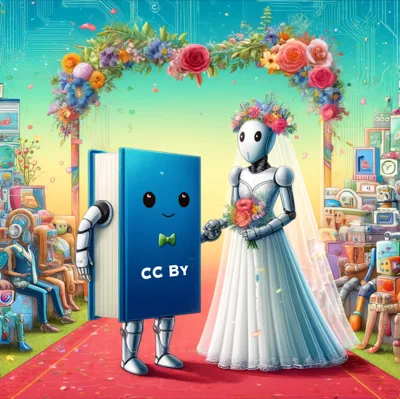
Millions of Open Educational Resources are available, but many lack depth or accessibility, or fail to meet diverse student needs. Learn how to use AI to modify and supplement existing OER, making them more thorough, inclusive, and supportive for all learners.
Half-day, full-day, and multi-day options available. Choose from any combination of topics above, these specialized workshops, or request another topic customized for your organization.
Where AI use should stop, how to support students tempted to over-rely on it, and how to talk with a student about suspected AI use, with practice in the AI Conversation Simulator. Offered in person.
Use AI to turn a strategic plan into action steps, timelines and progress checks your team can keep up.
Plan an AI rollout around how new practices spread through a staff, from early adopters to the people who need more time.
For school HR teams: ethical AI use in hiring, communications and employee support, and the privacy questions to settle first.
An introduction for any staff group: how generative AI works, where it fails (bias, accuracy, privacy) and how to use it well.
Build interactive activities, quiz types and accessible HTML pages with AI, and test them by keyboard before they reach students.
Build skills and saved prompts for your standards, review steps and accessibility checks, and keep them in a shared library your organization owns. Works with Claude, ChatGPT or Gemini.
Whether you need a single presentation or a year-long partnership, get in touch. Group rates and package deals available.