Assignment 1.5: Trading Post Description Assignment
Learning Targets
I can write vivid setting descriptions using sensory details.
I can develop a fantasy setting that reflects thoughtful cultural world-building.

Your Task
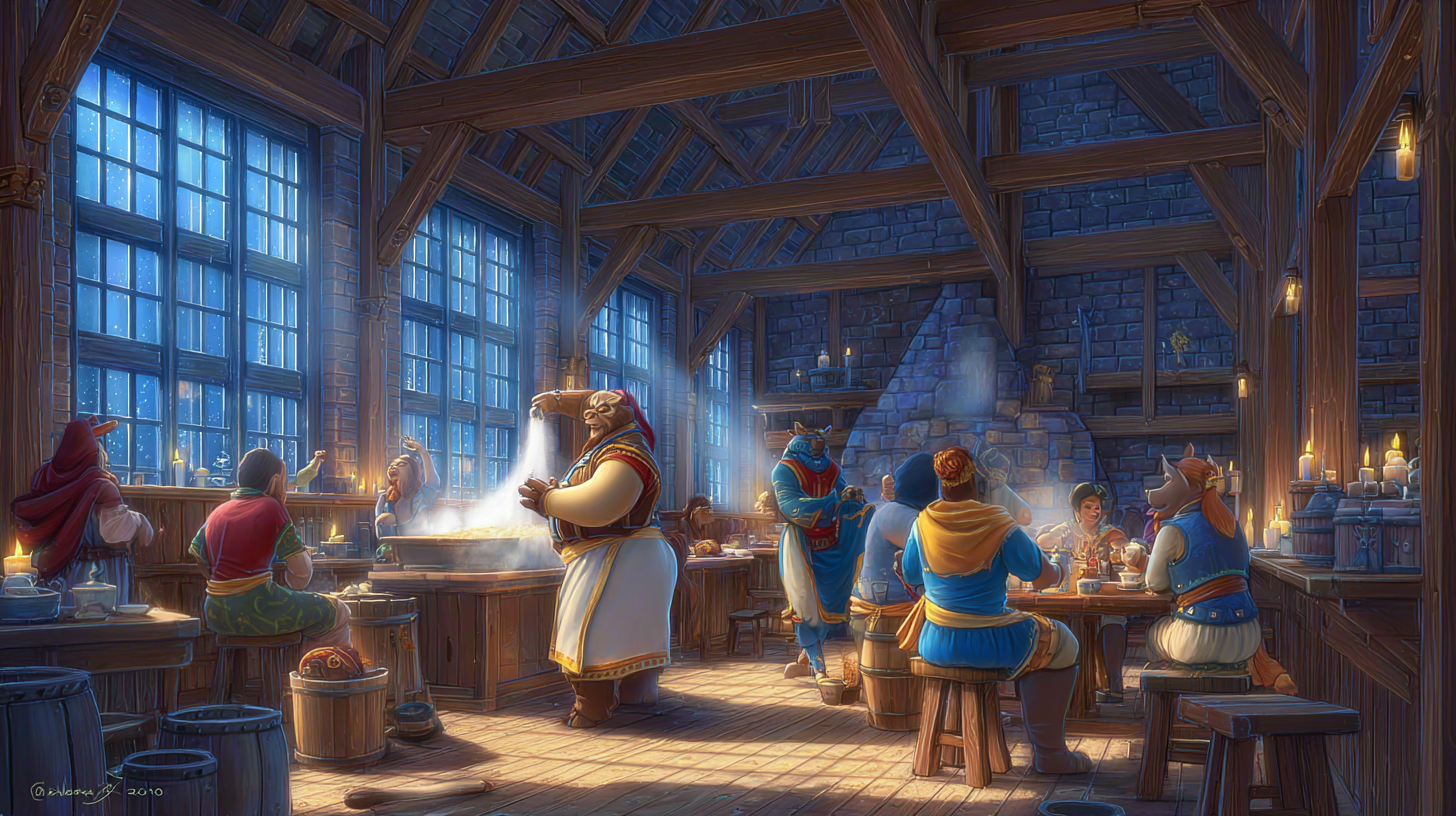
Every D&D adventurer needs a place to resupply, trade, and hear rumors from distant lands. The trading post is one of the most essential settings in fantasy — a crossroads where goods, cultures, and stories converge. Your challenge is to write a trading post that feels specific, alive, and original, not a generic fantasy supply shop.
Directions
-
Choose one of these trading post concepts OR create your own:
A floating trading post on a river barge that drifts between port towns, selling cargo collected along the wayA trading post built into the hollow of a massive ancient tree , where forest dwellers exchange goods with outsidersA desert oasis trading post that only opens for business when the caravans arrive at duskA trading post carved into a cliff face , with goods hauled up by rope and pulley from ships belowYour own original concept (describe it in 1–2 sentences before writing)
- Plan your trading post. Consider: Who owns it? Who comes here? What's the atmosphere? What makes it unique? What cultural traditions does it reflect? Make brief notes.
-
Write a 500–700 word description of your trading post. Requirements:
- Use the 3-2-1 rule at minimum (3 visual, 2 non-visual sensory, 1 cultural/emotional)
- Include at least ONE named character (the post master, a regular trader, a traveling merchant, or a local artisan) who reveals something about the trading post's identity
- Establish a clear and consistent mood through word choice
- Include at least one cultural detail that suggests the trading post exists in a specific world with its own traditions
-
Include a Secret or Mystery
Every memorable place has something beneath the surface. Your trading post should include at least one element that hints at something hidden, unexplained, or waiting to be discovered. Some possibilities:
- A locked back room that the post master never opens
- Unusual visitors who arrive only after dark
- A mysterious item on display that is never for sale
- Something about the post master's past that doesn't add up
- Goods that arrive from somewhere that doesn't appear on any map
Hint at the secret through sensory details without fully explaining it. A reader should feel that something interesting is going on — not be told what it is. This is the show-don't-tell principle applied to world-building.
- Write a 3–4 sentence writer's reflection: What mood did you aim for? Which sensory detail are you most proud of? What technique from the mentor text or Lesson 1.4 did you deliberately use? How did you weave the mystery element into your description?
 Language is Part of Your Story
Any fantasy marketplace worth its salt would have multiple languages and dialects — traders from different regions speaking different tongues, local idioms, and unique ways of talking. These linguistic details can make your trading post feel authentic and alive. As you write and brainstorm, feel free to use languages and language varieties that are meaningful to you. If you incorporate words, phrases, or dialects from languages beyond English in your final submission, add a brief author's note explaining what they mean and why you chose them. Your own multilingual resources are worldbuilding tools that deepen your creative vision.
Rubric
| Criterion | Developing (1–2) | Proficient (3) | Exemplary (4) |
|---|---|---|---|
| Sensory Detail & 3-2-1 Rule | Fewer than 3 sensory types; details generic or disconnected from trading post | 3-2-1 met; details specific to this trading post | Sensory details woven naturally; each contributes to mood and world |
| Character Integration | No character present, or character is disconnected from setting | Named character present; reveals something about the trading post | Character and setting feel inseparable; the person BELONGS to this place |
| Mood & Word Choice | Mood unclear or inconsistent; generic words | Consistent mood; intentional word choices visible | Every sentence deepens the mood; word choices are precise and evocative |
| Cultural World-Building | No cultural details; could be any generic trading post | At least one cultural detail that grounds the trading post in a specific world | Cultural details layer naturally; world feels lived-in and authentic |
| Secret/Mystery Element | No mystery element, or mystery stated explicitly rather than hinted | At least one mystery element hinted through sensory or character details | Mystery woven naturally into the description, creating intrigue without breaking mood |
| Writer's Craft Growth | Reflection missing or generic | Reflection identifies specific technique used and mood aimed for | Reflection shows sophisticated awareness of craft choices and growth from previous assignment |
Challenge: Full Sensory Inventory
For writers who want to push further, try including: 3 visual details (lighting, goods, layout), 2 distinct sounds (conversation, ambient noise, commerce), 2 smells (goods, food, atmosphere), 1 texture or temperature detail, and 1 taste reference. This goes beyond the 3-2-1 minimum and ensures you practice every sense.
Tip: Layer Your Senses in a Single Sentence
Instead of listing senses one at a time, weave them together: "The fire crackled (sound), throwing dancing shadows across walls darkened by decades of lamp smoke (sight), while the mingled scents of dried spices and oiled leather hung heavy in the warm air (smell, temperature)." Layered sensory writing feels more immersive because that's how we actually experience places — everything at once.
Also remember: specificity matters. "A cup of cider" is generic. "A clay cup of orchard cider, still warm, with a cinnamon stick slowly dissolving at the bottom" is memorable. Specificity is what separates a description from an experience.
How to Submit Your Work
Choose how to present your trading post:
Option A: Written Description Only
Submit your 500–700 word description as a document, plus your 3–4 sentence writer's reflection.
Option B: Description + Visual
Submit your 500–700 word description with an accompanying hand-drawn or digital floor plan or sketch of the trading post, plus your reflection.
Option C: Description + Audio Recording
Submit a 2–3 minute audio recording of you reading a key passage in character as the post master describing the place to a new arrival, plus a written copy of your full description, plus your reflection.
Respectful World-Building
The cultures we create in fantasy reflect the cultures we know — or think we know. As you build your trading post's culture, push past the first idea that comes to mind. Ask yourself: Am I drawing on a specific real-world tradition? If so, am I representing it respectfully? Could someone from that culture see themselves in my description with pride, not as a stereotype? Strong world-builders research, ask questions, and revise.

AI Guidance for This Assignment
Do not use AI to generate your trading post concept, description, or any part of your draft. You may ask an AI tool to ask you questions about your trading post to help you think through details (for example, "Ask me questions about the trading post I'm creating"). After writing your own complete draft, you may use AI for grammar and spelling checks only. Submit your planning notes as process evidence.
Process Evidence
Submit your planning notes (step 2) alongside your final description and reflection. These show your thinking process and world-building decisions.
Revision Opportunity
After peer feedback (next activity), you'll have the chance to revise. Professional writers revise every piece — this is how craft develops.

What's Next
In Activity 1.5.1: Peer Review — Trading Post Description , you'll exchange your work with a classmate and provide constructive feedback using a structured protocol.