Assignment 1.3: Hometown Fantasy Setting Assignment
Learning Targets
I can write vivid setting descriptions using sensory details.

Your Task
You've learned what makes settings powerful and analyzed how a published author builds a world. Now it's your turn. You're going to take a place you know — your hometown, your neighborhood, the block you grew up on — and transform it into a fantasy setting. The best fantasy worlds feel real because they're rooted in real places and real experiences.
Directions
- Choose a real place you know well. It could be your town, a neighborhood, a specific building, or a natural landmark.
- Make a list of 8–10 real details about this place: what it looks like, sounds like, smells like, the people who live there, the stories it holds.
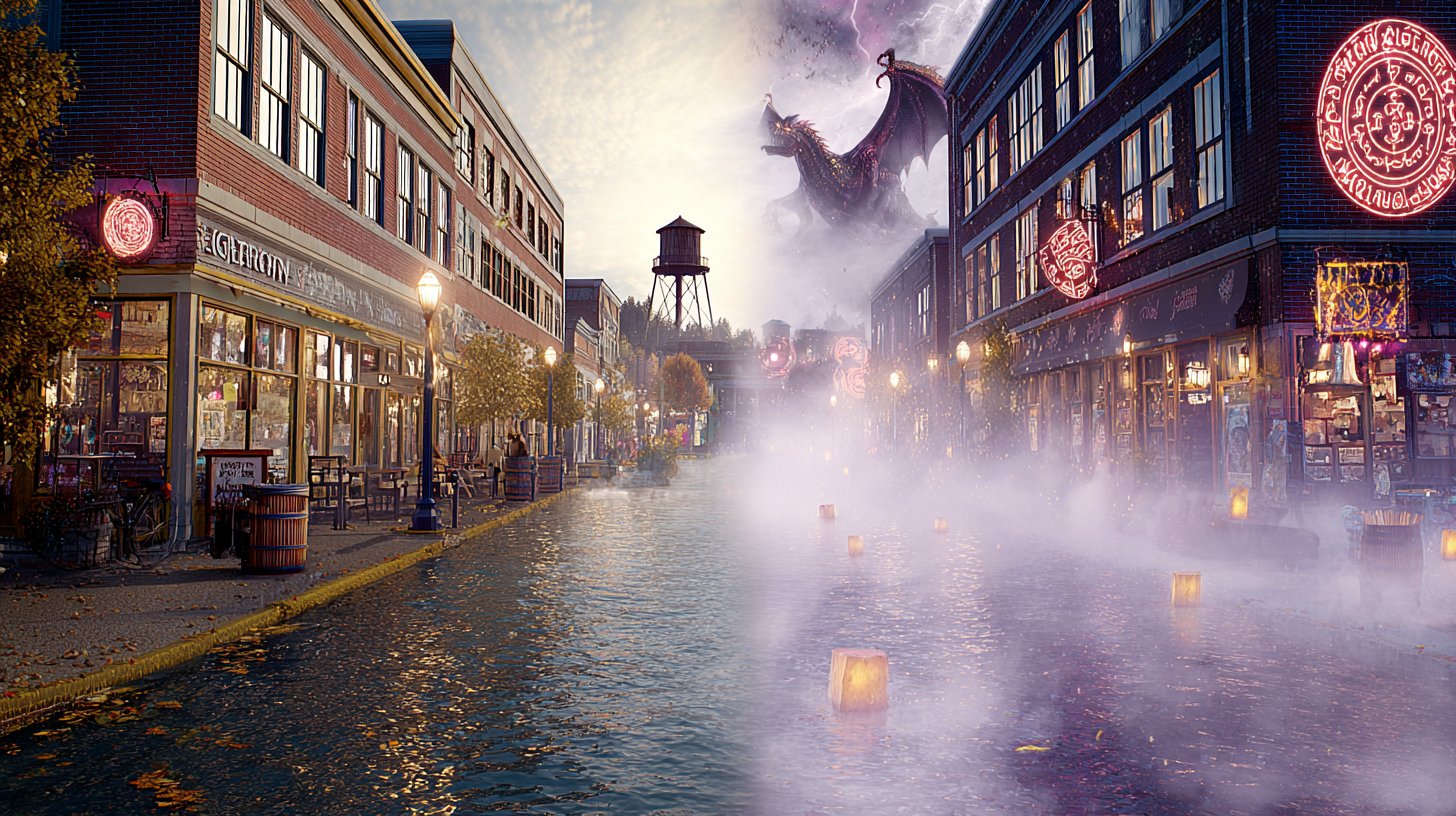
- Now reimagine those details through a fantasy lens. A water tower becomes a wizard's observatory. A busy intersection becomes a crossroads where travelers from different kingdoms meet. A corner store becomes an alchemist's shop.
- Write a 400–600 word setting description of your fantasy-transformed place. Include details from at least three senses, establish a clear mood, and hint at the culture and history of this place.
- After your description, write a 3–4 sentence reflection explaining which real details you kept and why they matter to you.
 Language is Part of Your Story
Your hometown has its own language, dialects, and unique expressions — maybe regional slang, words from languages your family speaks, or phrases people in your area use differently. These authentic linguistic details can make your fantasy setting feel richer and more real. As you write your description, feel free to brainstorm and draft in any language that feels natural to you. If your final submission uses expressions or words from languages beyond English, add a brief author's note explaining what they mean and why you chose them. Multilingual writing is a creative strength that brings depth to world-building.
Example: What a Strong Transformation Looks Like
"Where the interstate once cut through the valley, the Scar now runs — a jagged canyon that appeared when the Last War ended. The town of Millbrook clings to its eastern edge, wooden buildings perched on platforms that extend over the void. Below, in the perpetual twilight of the canyon floor, something glows with a faint blue light that pulses like a heartbeat. The old-timers say it's the dreams of everyone who died in the War, still waiting to wake up. On the main boardwalk, Mrs. Castillo's General Goods has become Castillo's Emporium of Curiosities, and the hand-painted sign promises 'Maps, Medicines, and Things Best Left Unasked About.' The smell of her coffee — strong enough to strip paint — still drifts across the walkway every morning, just like it always did."
Requirements
- 400–600 words (description) + 3–4 sentences (reflection)
- At least 3 senses used
- Clear mood/atmosphere established through word choice
- Cultural or historical details that suggest a living world
- Personal connection to a real place is evident
- Reflection explains your creative choices
Rubric
| Criterion | Developing (1–2) | Proficient (3) | Exemplary (4) |
|---|---|---|---|
| Sensory Detail (3+ senses) | One or no senses used; details are generic | Three senses present; details are specific to this place | Multiple senses woven naturally throughout; details are vivid and precise |
| Mood & Word Choice | No clear mood; word choices are generic | Consistent mood established through intentional word choices | Mood is immersive; every word choice contributes to atmosphere |
| World-Building Depth | Setting feels like a backdrop; no cultural details | Cultural or historical details suggest a living world | Rich cultural layering; the reader wants to explore this place |
| Personal Connection | No connection to a real place evident | Reflection clearly connects fantasy to real details | Real-world roots enrich the fantasy; transformation feels meaningful |
How to Submit Your Work
Choose how to present your work:
Option A: Written Description Only
Submit your 400–600 word description as a document, plus your 3–4 sentence reflection.
Option B: Description + Visual
Submit your 400–600 word description with an accompanying hand-drawn or digital sketch/map of the location, plus your reflection.
Option C: Audio + Written
Submit an audio recording (3–4 minutes) of you reading your description aloud, plus a written copy, plus your reflection.
Your Place, Your Perspective
This assignment asks you to draw on personal experience. The places that matter to us shape who we are. As you write, notice what emotions come up. What does this place mean to you? How does transforming it into fantasy let you see it differently? Your creative choices are never random — they reveal your perspective as a storyteller.

AI Guidance for This Assignment
This assignment is about YOUR place and YOUR creative vision. Do not use AI to generate descriptions, brainstorm fantasy elements, or write any part of your draft. You may ask an AI tool to ask you questions about your hometown to help you remember details (for example, "Ask me questions about the place I grew up"). After writing your own complete draft, you may use AI for grammar and spelling checks only. Your reflection must be your own words. Submit your brainstorming notes as process evidence.
Process Evidence
Submit your brainstorming list (step 2) and your fantasy transformation notes (step 3) alongside your final description. These show your creative thinking process.
Revision Opportunity
After you receive feedback, you'll have the opportunity to revise this piece. Revision is what professional writers do — it's a sign of growth, not a sign of failure.

What's Next
In Lesson 1.4: Sensory World-Building , you'll learn specific techniques for making your sensory details even more powerful.