Lesson 1.2: The Power of Setting Lesson
Learning Targets
I can analyze how published authors use setting details to create mood and meaning.
I can use analytical vocabulary (mood, tone, atmosphere, connotation) to describe how setting details affect readers.

Triggering Event
You walk into two different rooms. The first has cracked plaster walls, a single bare light bulb swinging from the ceiling, and the faint sound of a dog barking somewhere outside. The second has floor-to-ceiling bookshelves, a crackling fireplace, and the smell of cinnamon. You haven't met a single character yet, but you already feel something different about each place. That's the power of setting. It doesn't just tell readers where they are — it tells them how to feel.
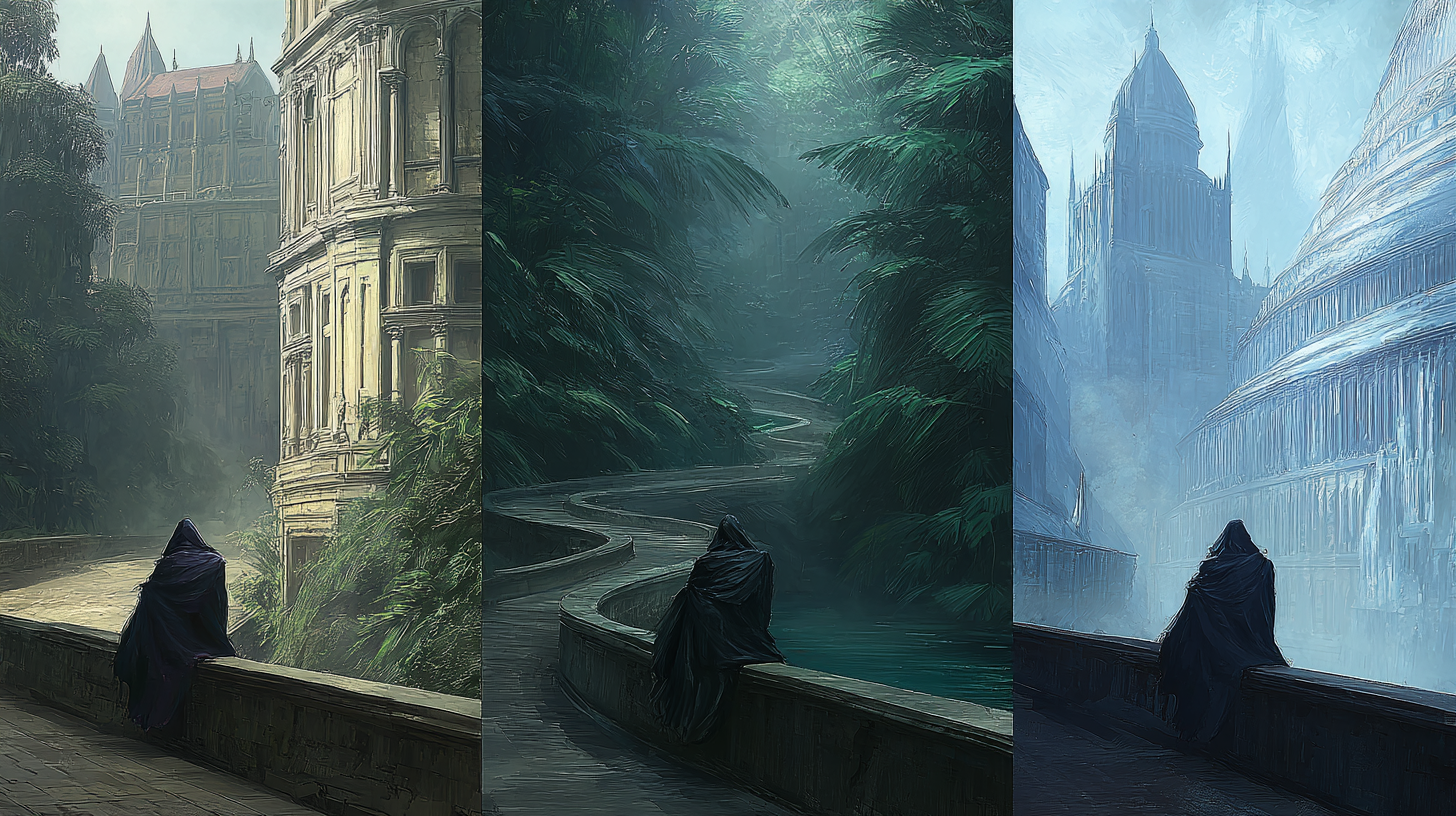

Setting as More Than a Backdrop
Setting is one of the most powerful tools in a writer's craft. It does four things simultaneously.
Creates mood and atmosphere: Setting establishes the emotional tone of a scene. A decrepit mansion feels different from a sunlit garden, even before anything happens. The details you choose — lighting, color, sound, temperature — make readers feel welcome, uneasy, enchanted, or afraid.
Reveals character: Where characters are and how they interact with their surroundings tells you who they are. A character who carefully tends a garden shows different values than one who lets it fall to ruin. In D&D, the game master's descriptions of a trading post—who's there, what's on the walls, how the light falls—reveal the trading post's history and the culture that created it.
Drives or constrains plot: Setting isn't passive. A mountain pass that's snowed in forces different choices than a wide-open plain. A magical forest with its own rules creates different obstacles and possibilities than a predictable road. The environment itself becomes an active force in the story.
Builds cultural context: The details of a setting show readers what a culture values, what it fears, and how it lives. A marketplace with dozens of food vendors tells a different story than a marketplace where food is rationed. A temple or home or town square reveals the traditions, beliefs, and daily rhythms of the people who built it.

How Authors Build Worlds with Words
Sensory detail selection matters: What you include AND what you exclude shapes how readers see the world. If you describe every sound but never mention color, readers will experience the setting as a soundscape. If you focus on texture and smell but not visual details, the setting becomes intimate and tactile. Strong writers choose sensory details deliberately based on what they want readers to feel.
Connotation and word choice create emotional resonance: Consider the difference between "cold," "frigid," and "biting." They all describe low temperature, but each carries different weight. "Cold" is neutral. "Frigid" feels scientific, perhaps alienating. "Biting" is visceral—it hurts, it demands attention. The connotations of your words shape the mood. A room with a "modest" fire feels different from one with a "meager" fire or a "weak" fire. Each word carries baggage that influences how readers feel.
Pacing of description matters: When do you slow down and linger over details? When do you move quickly? If you spend a paragraph describing a single room's texture and light, you're telling readers: "This matters. Pay attention here." If you rush through description, readers sense urgency. A skilled author uses pacing to guide readers' attention and emotional investment.
Layering brings worlds to life: Strong descriptions combine physical details with emotional or historical resonance. It's not just "a library" — it's "a library where books line every wall from floor to high ceiling, thick with dust, smelling of paper and time, as if the building itself remembers every story ever shelved within it." The physical details + the emotional resonance = a world that feels real and lived-in.
The Iceberg Principle of World-Building
Like an iceberg, most of your setting should remain below the surface. You might know the complete 500-year history of a city, but your readers will only see hints of it — a monument in the square, a bitter comment from an old merchant, a festival that commemorates a forgotten war. This depth makes settings feel real even when most details are never explicitly stated.
The best world-builders create ten times more than they show. A single sentence about a faded mural on a wall can imply an entire history of conquest and resistance. A character's refusal to cross a bridge can suggest a story you never need to tell. Your job as a writer is to know the full iceberg — and then choose which tip to reveal.

Reading Like a Writer
Published authors are your teachers. When you read their work closely, you can learn their techniques and adapt them for your own writing. These authors are called mentor texts —published pieces of writing that model craft techniques you want to master. When you read a mentor text, you're not just enjoying the story; you're asking: "How did they do that? What technique could I steal and make my own?"
Strong world-building exists across many literary traditions and genres. Whether you're reading fantasy by Ursula K. Le Guin, magical realism by Isabel Allende, or speculative fiction by N.K. Jemisin, authors from diverse backgrounds bring their own cultural knowledge and storytelling traditions to world-building. When you study mentor texts, pay attention to the cultures and traditions they're drawing from—and notice which voices and perspectives you hear often, and which ones are missing.
In the next activity, you'll read a mentor text excerpt and practice analyzing it like a writer. You'll ask yourself: What creates the mood? What senses dominate? What does this setting reveal about culture? What techniques could I use in my own writing?
Setting Works Differently Across Genres
| Genre | How Setting Functions |
|---|---|
| Horror | Creates dread, isolation, claustrophobia; the environment threatens |
| Romance | Establishes atmosphere and intimacy; the environment reflects emotion |
| Mystery | Hides clues, creates red herrings; the environment conceals truth |
| Fantasy | Establishes the rules of the world; the environment defines possibility |
| Adventure | Creates obstacles and discoveries; the environment challenges characters |
Notice that the same room described differently can serve any of these genres. A forest in a horror story feels dangerous; the same forest in a romance feels enchanted; in a mystery, it hides a secret. The genre tells you which sensory details to emphasize.
The Three Layers of Setting
Every setting has three layers. Strong world-builders develop all three:
Physical Environment: The geography, climate, architecture, and sensory details of the place. What does it look like, sound like, smell like? What's the weather? What are the buildings made of? This is the layer readers experience most directly.
Social Environment: The people and systems that inhabit the place. Government, economics, culture, religions, social hierarchies, and tensions between groups. Who has power here? Who doesn't? What are the unwritten rules?
Historical Context: The past that shaped the present. Founding stories, past conflicts, migrations, changes over time, and secrets buried by years. Why does this place look the way it does? What happened here before?
When you're building a setting, ask yourself: Have I addressed all three layers? A setting with only physical details feels like a painting — beautiful but lifeless. Add social and historical layers, and it becomes a world.
Key Vocabulary
Sentence Frames for Analysis
Use these frames to practice talking about setting like a writer:
 Settings in Cultural Context
Settings in fiction don't exist in a cultural vacuum. When an author describes a marketplace, a temple, or a home, they're drawing on cultural knowledge and traditions. As you read and write settings, consider: Whose cultural traditions am I drawing from? Am I representing them with respect and accuracy? Strong world-builders research the traditions they reference and avoid relying on stereotypes. If you're creating a setting based on a real culture, take time to learn about it beyond surface-level details. If you're creating a fictional culture, ground it in thoughtful world-building that shows how the people of that world actually live.
Setting in Interactive Storytelling
In D&D, settings aren't just backdrops — they're interactive. This creates three additional functions that traditional fiction shares but D&D makes visible:
Adventure Hooks: Settings generate stories. A city with rival merchant guilds, a forest haunted by something ancient, a kingdom where the heir has vanished — these settings create immediate narrative possibilities.
Player Agency: Settings must be detailed enough for players to make meaningful choices but flexible enough to accommodate the unexpected. When a player asks, "What's behind that door?" or "What do the common people think about the governor?", the setting needs to have answers — or at least the foundation for improvised ones.
Consistency: Once established, setting details become rules. If you establish that magic is rare and feared, a character can't casually cast spells in the town square without consequences. This discipline transfers directly to fiction: your world's rules must be consistent, or readers stop trusting you.

What's Next
You're ready to practice analyzing setting in a real published text. In Activity 1.2.1: Mentor Text Analysis , you'll read an excerpt from a published fantasy or speculative fiction novel and answer analytical questions about how the author uses setting to create mood, reveal character, and build culture. You'll annotate the text, mark specific details that create a sense of place, and explain what techniques you could borrow for your own writing.