Unit 1: World-Building
How do the places we create reveal who we are as storytellers?
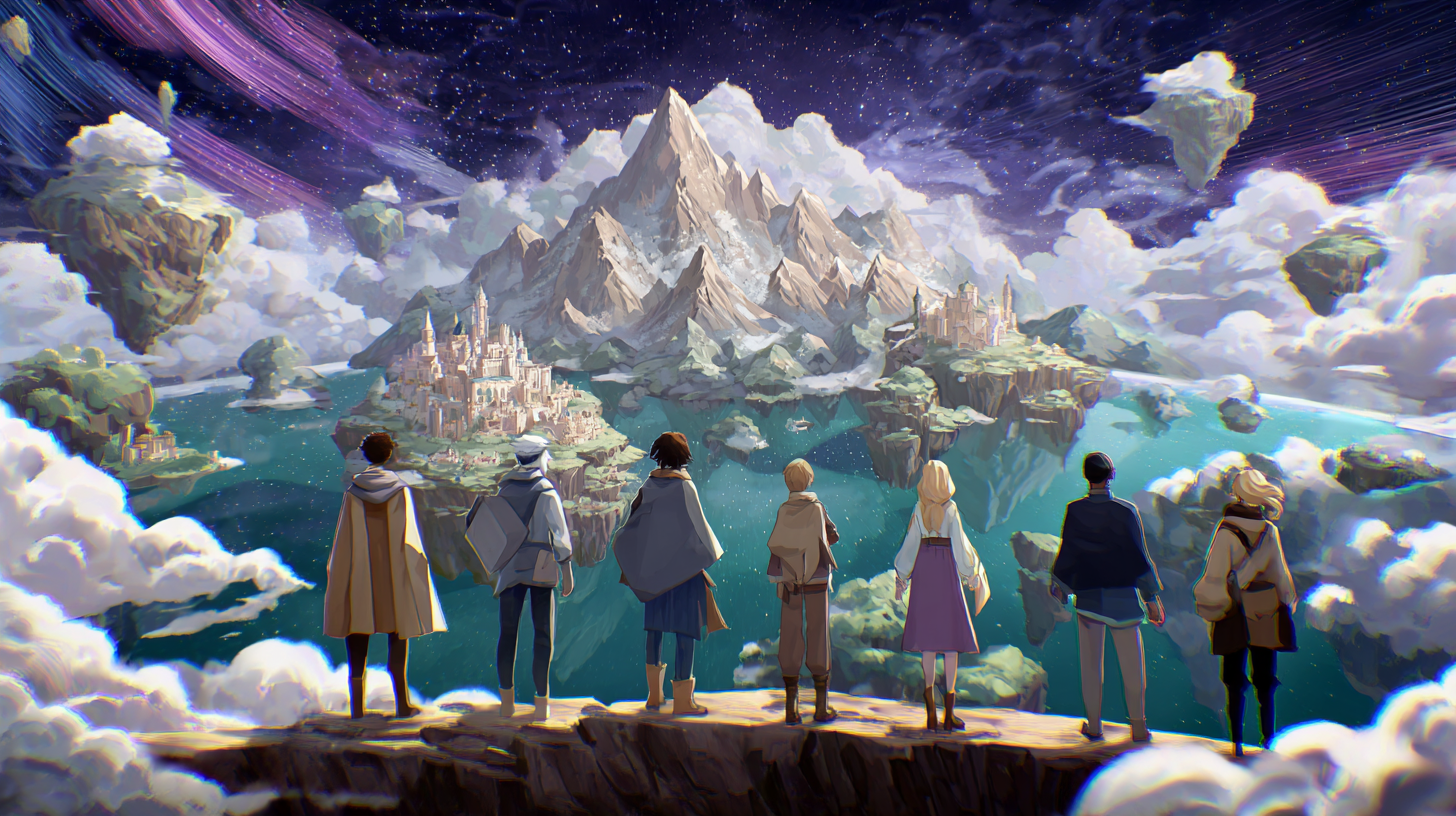
Welcome to Unit 1
Welcome to the world of D&D—and to a unit designed to help you become a world-builder. You've probably heard of Dungeons & Dragons as a game, but what makes it really powerful for writers is this: it's built entirely on imagination and description. When you play D&D, the game master describes a trading post, a forest, a hidden fortress, and the players must see it, feel it, and believe in it—all through words. That's exactly what you'll learn to do in this unit.
Dungeons & Dragons isn't just a game — it's a storytelling engine. The skills that make someone a great D&D player or Dungeon Master are the same skills that make someone a great writer: world-building, character development, narrative structure, dialogue, and collaborative creativity.
Over the next three weeks, you'll start with places you know—your hometown transformed into a fantasy setting—and gradually expand into entirely imagined worlds. You'll read how published fantasy authors craft settings that feel real and alive, you'll practice writing sensory details that pull readers into your scenes, and you'll create maps and regions with their own histories and cultures. Along the way, you'll give feedback to your classmates and receive theirs, learning from each other's creative choices. By the end of this unit, you'll have the skills and confidence to build worlds that feel authentic and unforgettable.
This journey isn't about getting everything right on the first try. It's about learning to notice the small details that make a place memorable, discovering your own voice as a storyteller, and understanding how world-building is at the heart of great creative writing. Let's begin.
Do I Need to Know D&D?
Not at all! This course is designed for everyone — whether you've been playing for years or have never touched a twenty-sided die. We'll explain any game concepts as we go, and the focus is always on the writing skills, not game mechanics. D&D is our creative framework, but the skills you'll build — vivid description, cultural world-building, narrative design — belong to every storyteller.
Learning Targets
I can analyze how published authors use setting details to create mood and meaning.
I can write vivid setting descriptions using sensory details.
I can develop a fantasy setting that reflects thoughtful cultural world-building.
I can use maps and geography to strengthen my storytelling.
I can give and receive constructive feedback on creative writing.
I can evaluate AI-generated writing and explain why human creativity matters in world-building.

Key Vocabulary
World-building
The process of creating an imaginary setting with its own geography, cultures, history, and rules.
Setting
The time, place, and atmosphere in which a story takes place.
Sensory detail
Descriptive language that appeals to the five senses (sight, sound, smell, taste, touch).
Mood
The emotional atmosphere a piece of writing creates for the reader.
Tone
The author's attitude toward the subject, conveyed through word choice and style.
Mentor text
A published piece of writing used as a model for studying craft techniques.
Tabletop RPG
A collaborative storytelling game, like Dungeons & Dragons, where players create characters and navigate an imagined world.
Peer feedback
Structured, constructive responses from classmates designed to help improve creative work.
What You'll Do
| Week | Focus | What You'll Do | Est. Time |
|---|---|---|---|
| Week 1 | Foundations | Explore what D&D is, analyze how published authors build worlds, and describe your hometown as a fantasy setting | 3–4 hours |
| Week 2 | Sensory Craft | Practice sensory writing techniques, create a detailed trading post description, and give peer feedback | 3–4 hours |
| Week 3 | Synthesis | Learn how maps tell stories, build a complete fantasy region, evaluate AI-generated world-building, and reflect on your growth | 4–5 hours |
 Self-Management
Planning for Success: Before you begin this unit, take a moment to think about how you'll manage your time over the next three weeks. What days and times work best for your creative writing? What might get in your way, and what's your plan for handling those obstacles?
Write two if-then statements:
- If [obstacle], then I will [strategy].
- If [obstacle], then I will [strategy].
Keep these somewhere you'll see them.
Progress Tracker
 AI Policy for This Unit
In this unit, your creativity and your voice are what matter. You may ask an AI tool to ask you questions to help you discover what interests you — for example, "Ask me questions about what kind of fantasy world I'd want to build." But the ideas, the descriptions, and every word of your drafts must come from you. After you've written your own complete draft, you may use AI to check grammar and spelling only. Do not use AI to generate ideas, write descriptions, create settings, or rewrite your work. Part of becoming a strong writer is struggling with words until they say what you mean — and that struggle is where the growth happens. Each assignment includes specific AI guidance for that task.
Resources and Attribution
This curriculum refers to the Dungeons & Dragons game system as an instructional framework. Dungeons & Dragons is a trademark of Wizards of the Coast LLC. This curriculum is not affiliated with, endorsed by, or sponsored by Wizards of the Coast. Any references to the game are conceptual and not taken from any game resource or text. Participants need no D&D experience to complete the activities within this course.
Mentor text excerpts are in the public domain or otherwise used under fair use for educational purposes with full citation.